
Alberobello Where the Houses Wear Hats
Alberobello is the sort of place that makes otherwise sensible adults point excitedly at roofs. 'Look at that one!' 'Yes, it is another pointy one.' 'I know, but look at it!' We arrived expecting a pretty Italian town. What we found was a collection of whitewashed stone houses wearing conical grey hats, arranged along winding lanes under a suspiciously blue Puglian sky. It is charming, unusual and almost impossible to photograph only once.
Trulli, Truly
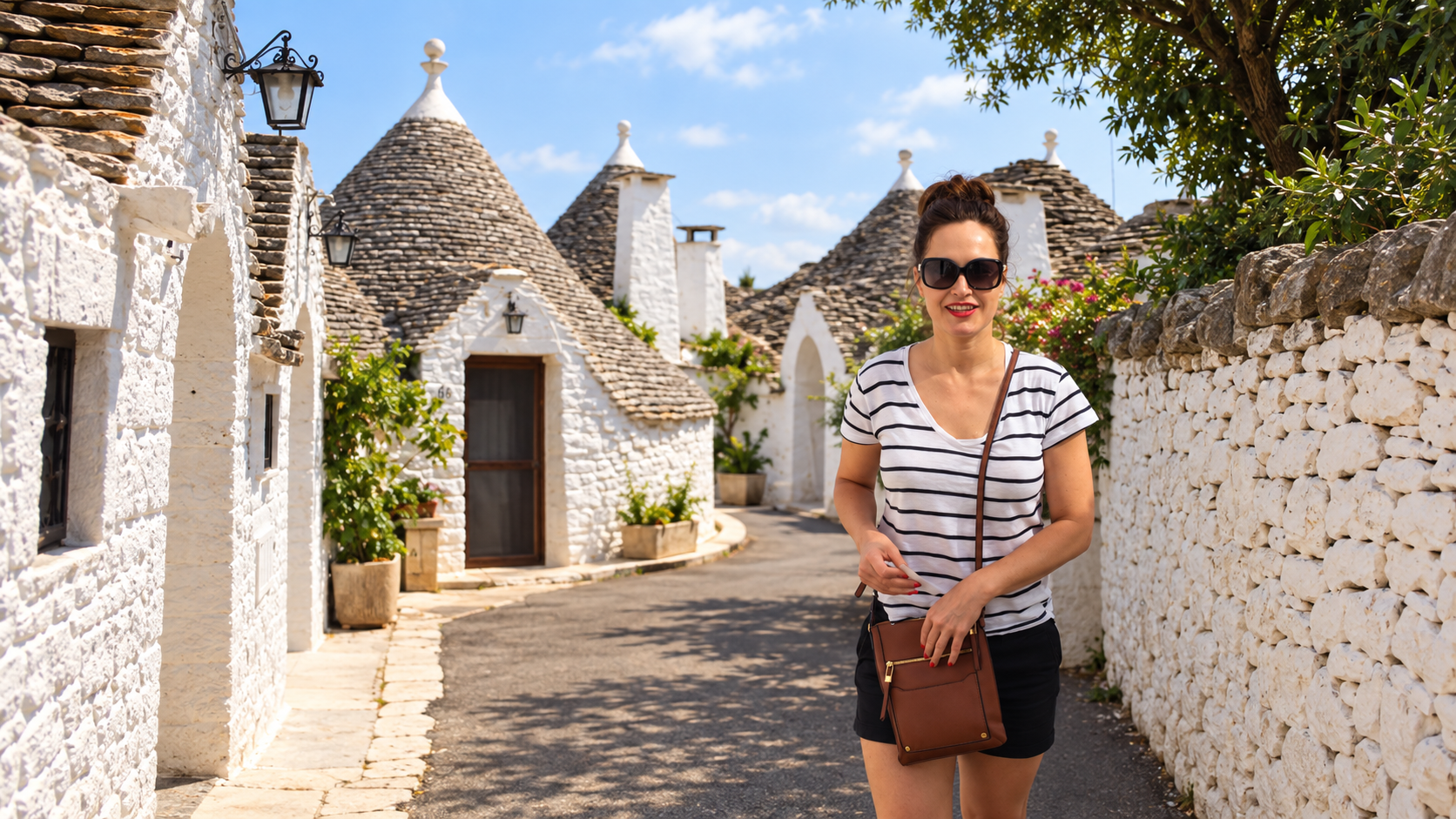
Yes, it really looks like that
Alberobello is famous for its trulli - trullo if you are fortunate enough to own just one. These traditional limestone buildings have thick white walls and conical roofs constructed from overlapping stone slabs.
They were built using a dry-stone technique, without mortar or cement. Considering some have survived for centuries, this may cause anyone with experience of Irish home maintenance to question everything they have ever been told about builders.
Trulli in this area date from at least the mid-14th century. More than 1,500 survive in Alberobello, forming one of the most distinctive townscapes in Italy. The trulli became a UNESCO World Heritage Site in 1996.
Some roofs carry painted symbols, while others finish with decorative pinnacles intended to keep away bad luck. We cannot confirm whether they also work against delayed flights, missing luggage or somebody suggesting a 6 a.m. departure.
Dinner Beneath the Arches
Two sides of Alberobello
The two main trulli districts have quite different personalities.
Rione Monti contains the greatest concentration of trulli. It is lively, photogenic and full of small shops, cafes and visitors trying to take a picture without another visitor taking exactly the same picture. It is worth seeing, but go early if you can.
Aia Piccola feels quieter and more residential. Trulli are still used as homes here, and the narrow streets have a more relaxed, lived-in atmosphere. If Rione Monti is the part of town posing for the photograph, Aia Piccola is the part getting on with its day.
Alberobello makes more sense when you see both districts. The trulli are not simply decorative holiday props. They remain part of a real town.
How to enjoy it without military planning
You do not need a clipboard, matching hats or an eight-stage itinerary. Give yourself at least a few hours to wander through both districts. Add longer if you want to visit the inside of a trullo, stop for lunch or investigate every shop selling olive oil, ceramics and objects you suddenly feel your kitchen cannot survive without.
Wear comfortable shoes. The streets are narrow, occasionally sloping and much better suited to walking than demonstrating that your holiday sandals were an excellent purchase.
In warmer months, arrive early or later in the afternoon. Bring water and sun cream. Puglian sunshine does not have the gentle ambiguity of an Irish summer. It knows exactly what it is doing.
The Belvedere di Santa Lucia is a good place for a wider view across the rooftops. Trullo Sovrano, the town's unusual two-storey trullo, is also worth seeing if you would like to understand how these buildings work inside.
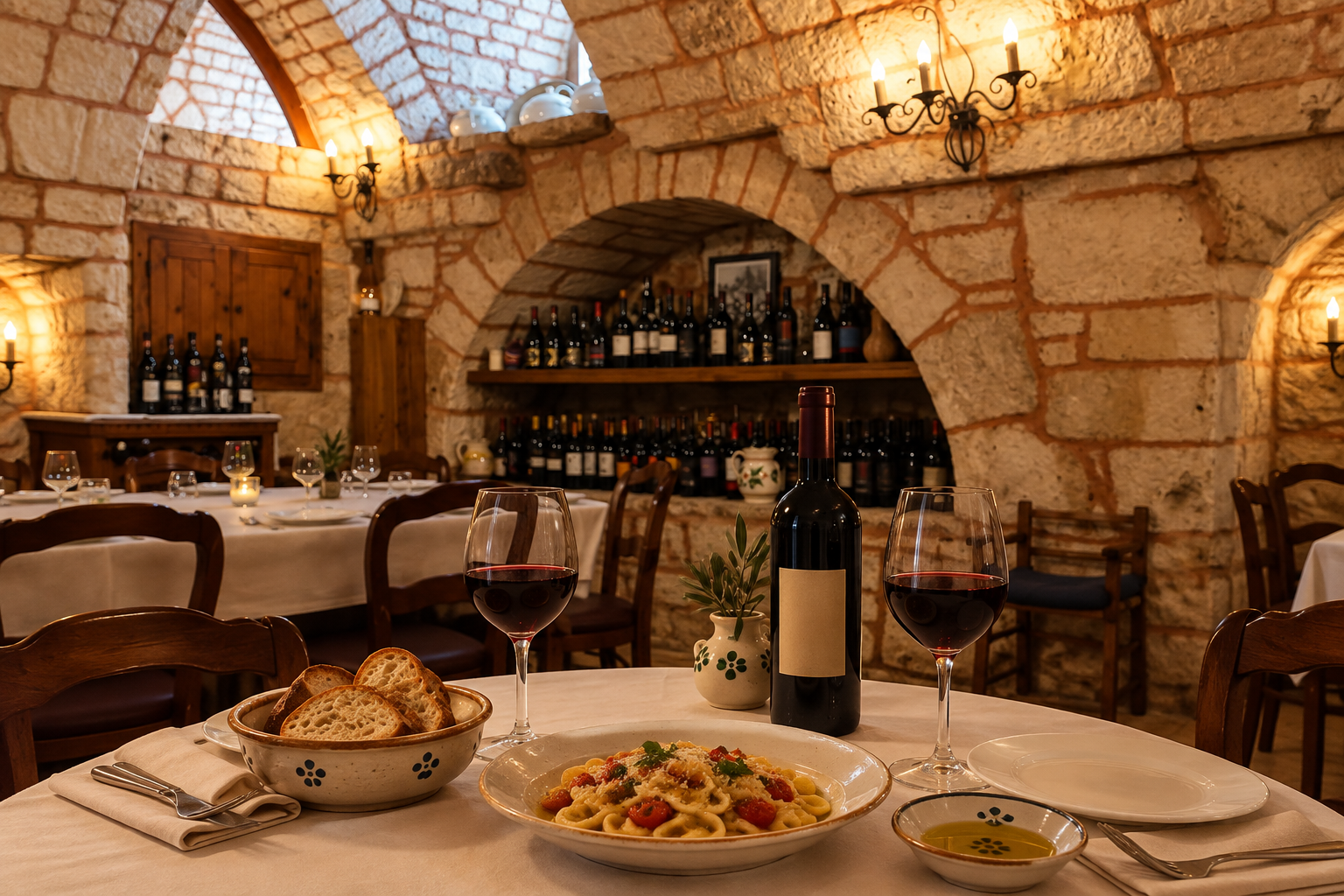
Dinner beneath the arches
After several hours of walking, pointing at roofs and taking photographs of Karin beside roofs, dinner felt well earned.
The restaurant's heavy stone arches, wooden chairs and shelves filled with wine gave it exactly the atmosphere we hoped to find in Puglia. It felt warm, relaxed and pleasantly removed from the brighter, busier streets outside.
This is not the place to overcomplicate the order. Look for regional pasta, local vegetables, good bread, olive oil and whatever the restaurant recommends that evening. Orecchiette is the classic Puglian pasta, although ordering something else will not result in immediate removal from the region.
Add a bottle of local wine and the day begins to organise itself.
The useful bit
Allow: Half a day, or longer with lunch or dinner
Explore: Rione Monti and Aia Piccola
Best time: Early morning or later afternoon
Wear: Comfortable shoes rather than ambitious shoes
Bring: Water, sun cream and room on your phone for many similar photographs
Try: Regional pasta, local wine and anything involving good olive oil
Expect: Crowds in the busiest streets, especially during summer
A town that earns its attention
Alberobello could easily feel like a place designed entirely for visitors. Parts of it are certainly busy and polished for tourism.
But step away from the main shopping streets and it becomes much more interesting. The stonework is beautifully imperfect, the lanes twist between homes that are still lived in, and every roof seems to have developed its own personality.
We came for the trulli, stayed for dinner and left with enough roof photographs to worry the storage capacity of a perfectly good phone.
Was it worth the visit? Absolutely.
Would we point excitedly at another trullo tomorrow? Trulli.
STAY AT THE TABLE
Enjoyed this story? Join our Italian table for more food, wine and travel inspiration — or follow CasaDelVino on Facebook and Instagram.
Follow CasaDelVino