
There’s a Rooster on My Wine
“Just bring yourselves,” they said.
So naturally, you’re standing in the wine aisle, choosing something to bring.
A Chianti catches your eye. Beside it is a Chianti Classico. Similar names, different prices—and a little black rooster on one of the bottles.
He’s worth noticing. That bird tells you something useful about the wine, and his backstory involves two rival cities and a suspiciously early start.
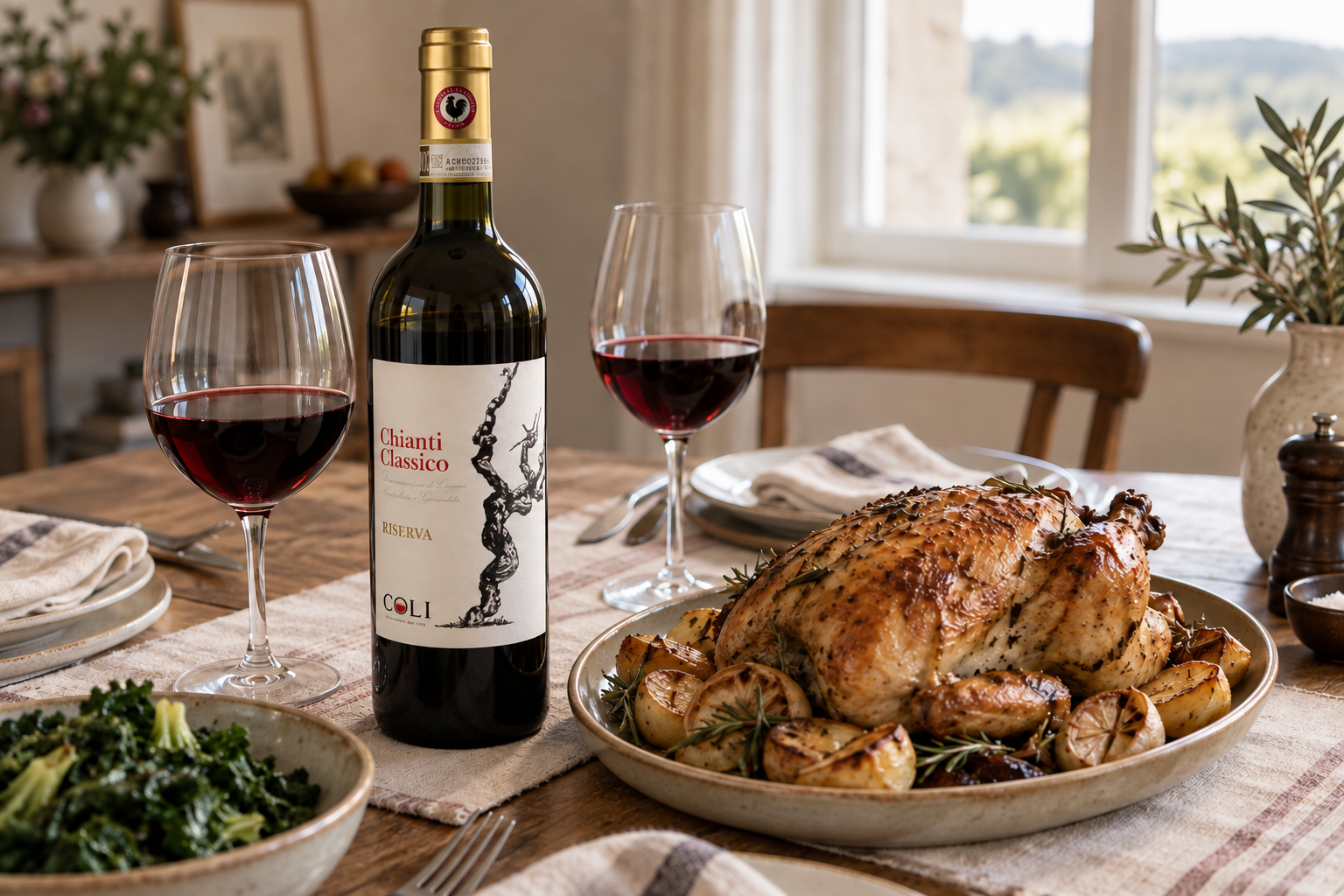
“Just bring yourselves.” We brought a bottle. Nobody objected.
A rooster with a history
According to legend, Florence and Siena agreed to settle a territorial dispute by sending a knight from each city when a rooster crowed. Wherever they met would mark the boundary.
Florence kept its black rooster hungry in a dark coop. When released, it crowed before dawn, giving the Florentine rider a substantial head start.
You suspect Siena would have liked a word with the referee.
That’s the legend. The historical link is that the black rooster became the emblem of the Chianti League, an alliance under Florence, in the fourteenth century. When local wine producers established their consortium in 1924, they adopted the symbol. Today, it identifies Chianti Classico. The legend · The emblem’s history
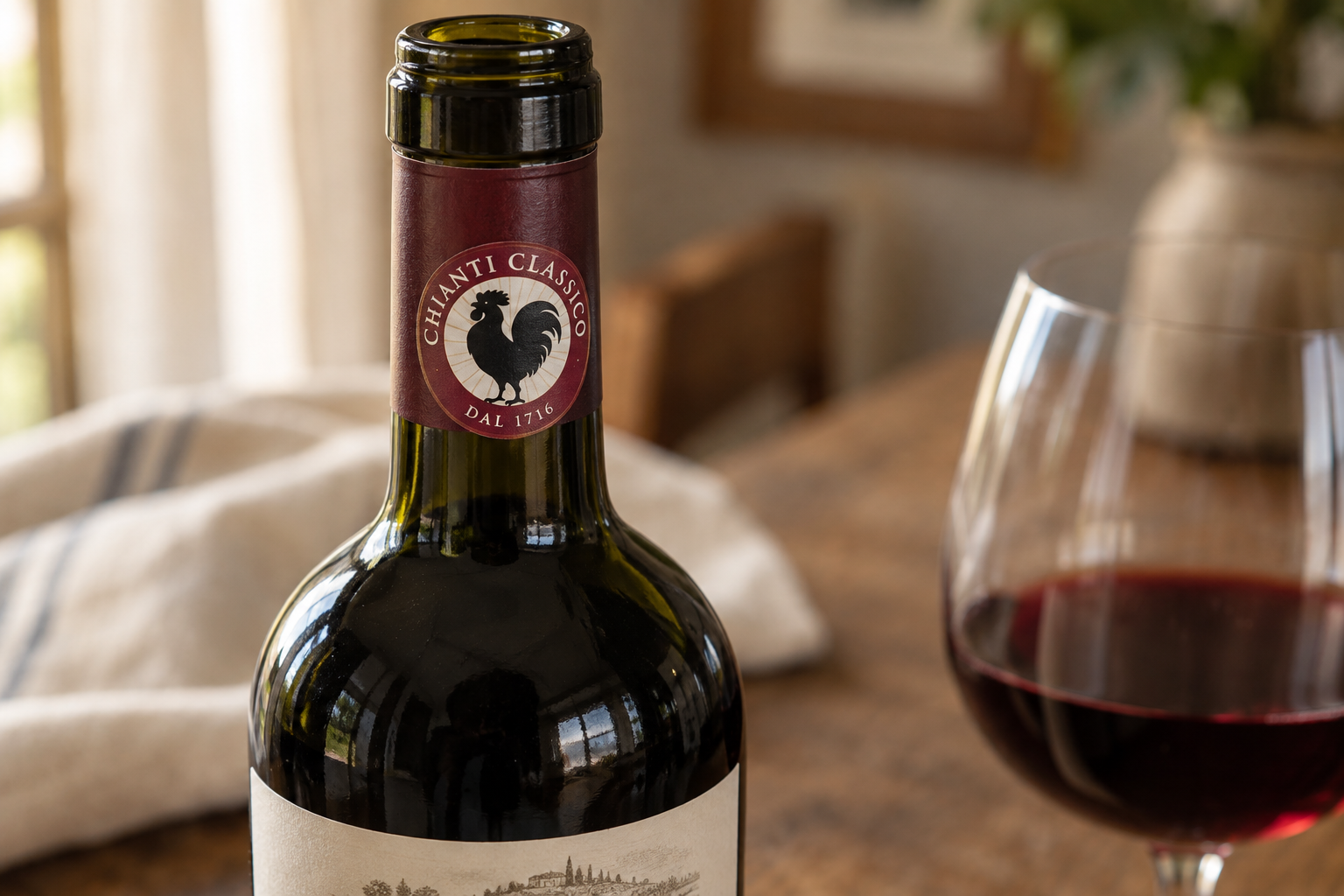
Small rooster. Big history. Still no comment from Siena.
Back to those two bottles
Chianti and Chianti Classico are both Tuscan reds built around Sangiovese, but they come from different areas and follow different production rules.
Chianti Classico comes from the historic wine-growing area between Florence and Siena. Chianti comes from a broader area outside those boundaries, including places you might spot on labels, such as Chianti Rufina and Chianti Colli Senesi.
They became legally separate denominations in 1996. “Classico” describes the wine’s origin, rather than the age of the bottle. Source: Chianti Classico consortium
The blends differ too. Chianti generally requires at least 70% Sangiovese, while Chianti Classico requires at least 80%. Some producers use Sangiovese alone; others blend it with permitted varieties. Source: WSET
Does that automatically make Classico the better buy? Your dinner, budget and taste still get a vote. Both offer plenty of variation. A producer you already enjoy can be a better guide than whichever bottle has the grandest wording.
What to look for on the label
Look for Chianti Classico and the Gallo Nero, or black rooster, on the neck or back of the bottle. The emblem belongs to Chianti Classico rather than Chianti generally. Source: official trademark guide
You might also spot Riserva. This means the wine has spent longer maturing before going on sale: at least 24 months for Chianti Classico Riserva, including three in bottle. It doesn’t mean you have to put it away until someone gets promoted. Source: Chianti Classico categories
A standard Chianti Classico often puts fresh fruit centre stage; a Riserva can bring more developed, savoury flavours. There’s variation in both, so it’s worth reading the tasting notes rather than letting the price make the decision.
For pasta with friends, we’d happily start with a standard Classico. For a long Sunday lunch, a Riserva could be interesting to explore. The occasion doesn’t have to be grand. Having everyone round the same table is a decent occasion already.
Now give it something to eat
Chianti Classico is a dry red with fruit, refreshing acidity and tannin—that gently drying sensation you might recognise from strong tea. Depending on the bottle and its age, you may also find floral or spicy notes. Source: tasting guidance
We’d start with pasta and a slow-cooked meat ragù, a pairing recommended by Chianti Classico producer Cantalici. It’s a useful dinner for friends: the sauce does most of its work before they arrive, leaving you free to explain that it was “nothing complicated”. Source: Cantalici
For Sunday lunch, roast chicken with herbs would be another inviting place to begin. Grilled meats also make good partners. As a starting point, choose a fresher style for a simple roast and something fuller for richer dishes.
Serve it at around 16–18°C. “Room temperature” becomes less helpful once the oven is on and someone has claimed the chair beside the radiator. If the bottle feels warm, a short spell in the fridge can help. Source: serving guidance
Then bring it to the table and enjoy it with dinner.
If someone notices the rooster, you’ve got a story ready.
Probably best to tell it before anyone from Siena arrives.
STAY AT THE TABLE
Join our Italian table for recipes, wine discoveries and travel inspiration from Italy and Ireland.
Follow CasaDelVino